Timber is a versatile and sustainable building material that is used in almost every building project in Australia. Laminated Veneer Lumber (LVL) is a popular choice of timber for construction. LVL is known for its strength and versatility, making it an excellent option for various construction projects. However, like all timber products, LVL requires treatment to withstand the harsh Australian climate and maintain its structural integrity. In this article, we will explore the different treatments we use for LVL timber and which applications each treatment is suitable for.
Why Do We Treat Timber?
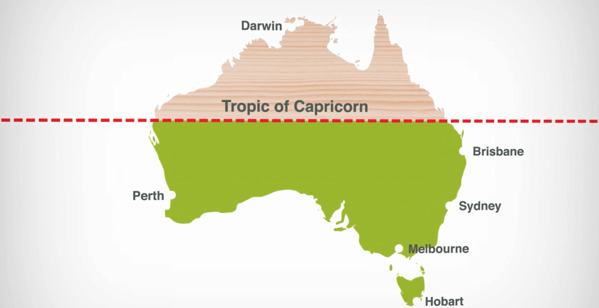
Treated timber is essential in a harsh climate like Australia. Timber is susceptible to various issues without proper treatment, including decay, termites, and fungal growth. A stronger treatment is needed North of the Tropic of Capricorn where termites are more aggressive. It’s always recommended that timber has termite treatment regardless of where you are using it.
Treatment helps enhance the timber's longevity, making it suitable for outdoor and structural applications. It also makes timber an eco-friendly choice, as it reduces the need for frequent maintenance and replacement.
Is LVL Timber Termite Resistant?
Whilst untreated LVL is not typically termite resistant, Wesbeam e2S LVL has a termite treatment in the glueline itself, making Wesbeam e2S resistant to termites South of the Tropic of Capricorn. This preservative treatment comes as a standard treatment level for most residential housing products. Higher levels of treatment can also be applied for structures North of the Tropic of Capricorn.
Timber Treatment Levels
A Hazard (H) Class is given to timber to indicate the conditions the wood can withstand. The higher the H class, the more protected the timber is from hazards. Wesbeam currently offers LVL at treatment levels H2 and H3.
All Wesbeam LVL is treated to an e2S level, making all our timber suitable for use South of the Tropic of Capricorn. The e2S treatment is applied in the glue lines during manufacturing. This means that when you cut, notch, splay, or drill a hole in Wesbeam LVL, the timber is still protected from termites. Please contact our experts on the Technical Hotline for further information about how to correctly add penetrations and cuts into our LVL products.
Can LVL be used externally?
Wesbeam LVL treated to Hazard Class H3 is suitable for outside, external applications. Our H3 Light Organic Solvent Preservative (LOSP) treated LVL provides additional protective measures to enable them to be used in outside, above-ground environments where periodical wetting may occur. As with any LVL, additional measures must be undertaken (physical membrane and paint application) to minimise surface checking of the face, and swelling and separation on the top edge of the veneers.
Which Treated Timber Should I Use?
Different types of treatment are required for timber depending on how and where it’s used. The treatment level required depends on several factors including:
Timber Application: is the timber above-ground, inside, outside, etc.
Design of building or component: is it above ground or in contact with the ground?
The degree of structural reliability required
The presence of hazards (moisture, decay, fire, etc.)
Location & Climate: North or South of the Tropic of Capricorn?
The table below lists the various Wesbeam manufactured products, the level of treatment and the applications that the products are suited for:
Treatment Level | Service Conditions | Typical Applications |
|---|
Untreated - No termite or fungicide treatment | | |
e2S - Termite protection only, glue-line treatment | | All floor, wall, and roof framing applications Roof framing Floor joists and roof rafters
|
H2 - Termite protection only | | All floor, wall, and roof framing applications Floor joists and roof rafters
|
H3 - The next level of treatment. Termite and fungicide protection | Outside, above ground. Subject to moderate wetting. For use in all geographical locations in Australia.
| |
Note: Wesbeam e-joists cannot be treated to Hazard Level H3, and cannot be used in external above-ground applications.
Choose Wesbeam For Treated Timber
If you need timber for your building project, Wesbeam’s treated LVL is a great choice. Wesbeam’s LVL is favoured not only for its termite resistance but for its consistent engineering properties and high strength-to-weight ratio as well. When the correct treatment is applied, LVL can withstand the harsh conditions of the Australian climate.
For more information on our treated timber and LVL products, contact us today or speak to our technical experts on e-chat.


